We’re Looking for a Sign

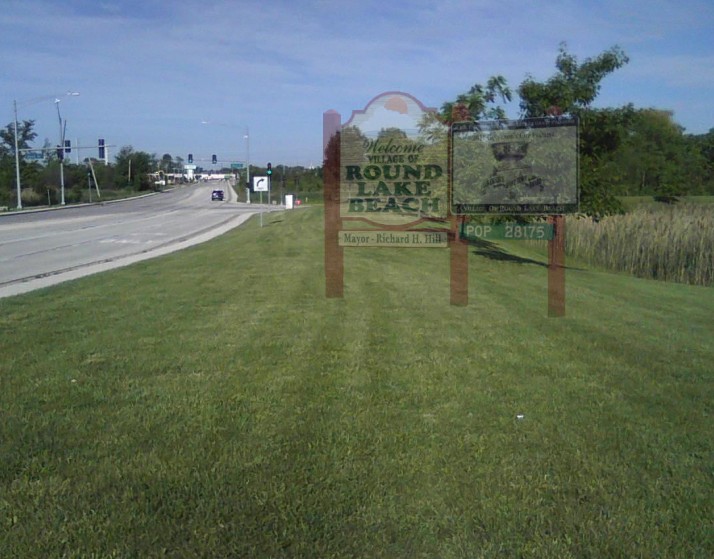
Literally, we’re looking for a sign. In particular, the “Welcome to the Village of Round Lake Beach” sign at the east “Gateway” into town.

We believe it was removed when Lake County DOT did the Rollins Road / Hook Drive renovation a couple of years ago, and was never remounted.

RLB_Gateway

We suspect it is sitting in the back lot of a Round Lake Beach Public Works facility, forgotten under some tarps, with other assorted objects piled-up around it.

Maybe it’s time we put our “Welcome Mat” back out?

Posted in Construction / Maintenance, Planning | Leave a comment

Bars and Beer: Essential to Community

Do YOU have a place near home where “everybody knows your name“?

Cheers cast

Copyright: NBC Studios

“Making your way in the world today
Takes everything you’ve got
Taking a break from all your worries
Sure would help a lot
Wouldn’t you like to get away?

Sometimes you want to go
Where everybody knows your name
And they’re always glad you came
You want to be where you can see
Our troubles are all the same
You want to be where everybody knows your name”

Finding such places is becoming more and more challenging these days, especially places within walking distance. Given the very legitimate concerns about drinking and driving, the fact that so much of the “developed” US outside of cities is explicitly designed to be driven to/from, there are fewer and fewer opportunities in the ‘burbs.
Just a little driving required...

A bar is a business type we should be encouraging people to walk, not drive, to reach. Civic and community groups frequently band together to hold places which serve alcohol to higher and different standards than other businesses, all the while forgetting to hold the local governments accountable for infrastructure which would make patronzing these places safer. (How are we doing with that?)

If you do not partake of the suds, you may make the mistake of believing that drinking beer is about drinking beer for the primary purpose of getting drunk. Wrong! (That’s what fishing is for; “hunting camp” too!)

Long-time SF-area beer critic (THERE’s a job for ya!) William Brand lamented:

“The American problem – our problem – is the way we live sucks. I mean we’re totally auto-oriented. Most of us live in places where mass transit doesn’t exist or is sucky.

… coming home, I don’t get back in the car ’til I’m certain I’m sober.  It’s a hell of a way to live. In fact, it changes where I go. I hate visiting friends where we’re going to drink good beer, but the only way to get there is driving. I envy my friends who live in San Francisco, Oakland and other cities, where a trip to the pub is a short walk.

For the rest of us, the whole system is loaded against us. We love good beer, but the laws are tough and cops are relentless.  What to do? Drinking at home is one solution, but nothing beats the warmth and friendship of a good pub. It’s a dilemma, isn’t it… “
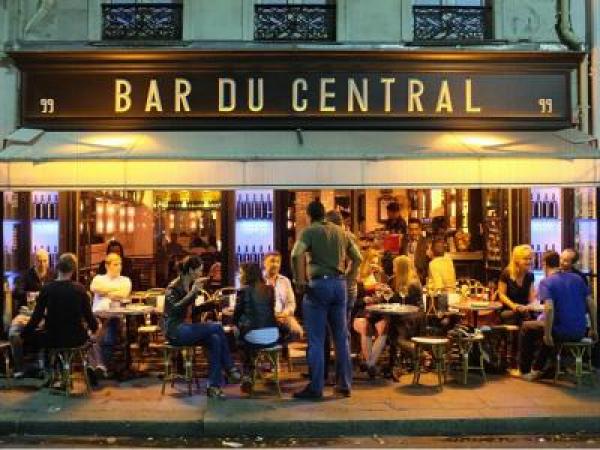
Bar Du Central

A “neighborhood watering hole” is a classic example of sociologist Ray Oldenburg’s “Great Good Place“, the all-important third place in our daily lives, someplace which is not home… and not work. These gathering places are essential to community and public life; Oldenburg argues that bars, coffee shops, book stores, hair salons, general stores, and other “third places” are central to community vitality.

In an article titled “In Praise of (Loud, Stinky) Bars“, Michael Hickey, a community development consultant,  rates neighborhood bars highly as essential components:

“The vaunted ‘third space’ isn’t home, and isn’t work – it’s more like the living room of society at large. It’s a place where you are neither family nor co-worker, and yet where the values, interests, gossip, complaints and inspirations of these two other spheres intersect. It’s a place at least one step removed from the structures of work and home, more random, and yet familiar enough to breed a sense of identity and connection. It’s a place of both possibility and comfort, where the unexpected and the mundane transcend and mingle.

And nine times out of ten, it’s a bar.”

Kaid Benfield (co-founder of Smart Growth America) writes in his article “Why a Good Bar Is Essential to Sustainable Communities“:

“The more complete our neighborhoods, the less we have to travel to seek out goods, services and amenities. The less we have to travel, the more we can reduce emissions. People enjoy hanging out in bars and, especially if they are within walking distance of homes, we can also reduce the very serious risks that can accompany drinking and driving.”

I might add that in the download age, which has already killed music stores, weakened movie theatres, put print newspapers on life support and finished off all but a few bookstores, the places that remain and offer a shared community commons are becoming more important.
Bars qualify: you can’t download a pint of Guinness.”

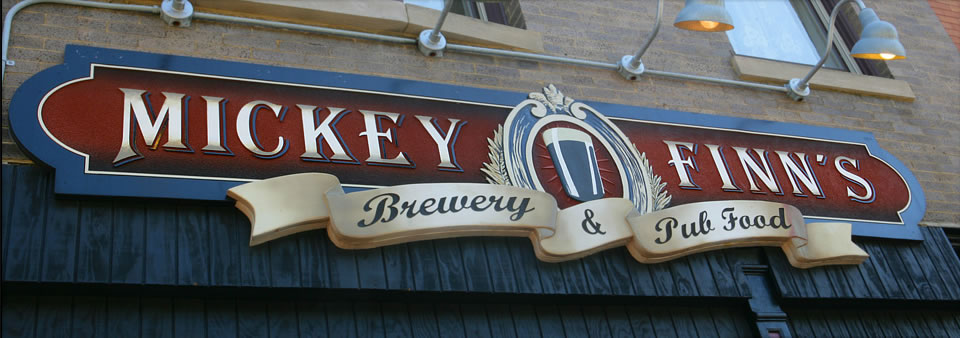
Mickey Finn's in Libertyville

No less than the mighty International Economic Development Council (IEDC) has weighed-in on the topic. Looking at how municipalities are re-marketing themselves as “destinations”, combined with the rapid growth of DIY and craft food & drink, the IEDC recently hosted a webinar entitled “How Can a Microbrewery Grow Your Local Economy“?

“Everybody’s into “buying local” nowadays. Why should your beer be any different?

Microbreweries offer substantial opportunities for communities. Not only do they allow for re-using vacant space, they also create local jobs; attract new companies or expand existing ones; and increase the tax base. In IEDC’s first web seminar of 2013, you will hear the academic, professional, and practitioner perspectives on how microbreweries help grow their local economies.”

We see it locally:

  • Grayslake: Opened the “Light the Lamp” Microbrewery (with seating and by-the-glass retail sales) in 2011. Also just concluded: The Grayslake Chamber of Commerce and the Exchange Club of Grayslake have partnered to present the 1st Annual Craft Beer Festival.
  • Libertyville: Mickey Finn’s brewpub has been a fixture of a lively downtown scene since 1994
  • Lake Bluff: Over the last few years, the Lake Bluff Brewing Company has quickly become a key part of social life in the far North Shore
  • Mundelein: Home of the Tighthead Brewing Company whose Tap-Room “is intended and expected to be “an extension of our family room”. A place where all are welcome to visit with friends, make new friends, share the trials and tribulations of your day, or week, or just watch a game and relax.”  The community also just had its 2nd Annual Craft Beer shindig this last weekend.

Like it or not, bars and the products they serve play a key part in “lubricating” the social fabric of a community. They’re sometimes seen by puritanical Village Elders as “Dens of Sin and Iniquity“. They can also be seen in the historical context as essential parts of neighborhoods and communities… going so far as to have local-government endorsed “beer gardens”.

The Milwaukee County Park System recently opened the Estabrook Beer Garden, operating as beer gardens always have (until prohibition screwed things up!)… as a FAMILY-FRIENDLY DESTINATION! In the days before air-conditioning, many cities had beer gardens, where a family could bring a picnic, enjoy cold drinks, and spend the day with friends. Beer gardens offered many pastimes besides just beer drinking: some spots hosted shooting galleries, bowling alleys, and live classical music. People could come for entertainment and events, even if they didn’t want to partake in the drinking. Today many beer gardens have outdoor games and board games available to patrons.
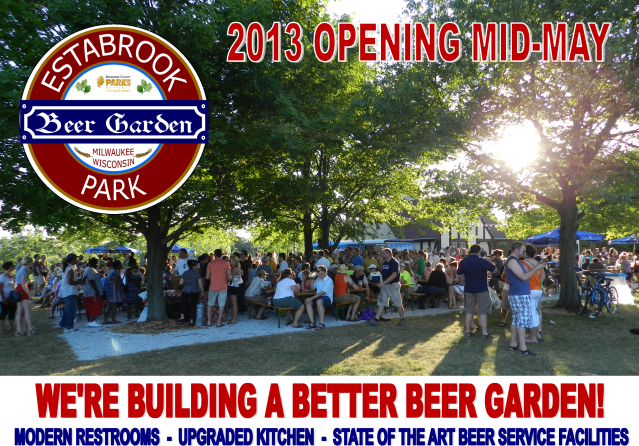
Estabrook Beer Garden

We’ve also mentioned “pop-up plazas” in other posts… works for beer gardens too! Have to get the RLB and Park District lawyers to stop scaring the Mayor, Trustees, and various Committee members with talk of lawsuits and litigation in order to allow something like this at one of our many parks.
– Orchard Park, surrounded 100% by residences, would be GREAT!

So, a little bit of “topic drift”, but still to the point. Whether from a fixed location or a temporary tent, beer attracts people, and more importantly… people attract people, and that’s a big part of having successful “places” in the community!

How will we capture the value of that idea and put it to work in Round Lake Beach?

Related Post (with content): https://reimaginerlb.com/2012/12/29/webinar-how-can-a-microbrewery-grow-your-local-economy/

Posted in Community, Walkability | Leave a comment

Roundabout Fallout

Wow, saw the first effects of the Monaville Rd / Cedar Lake Rd Roundabout Construction Project detours yesterday. Insane amounts of traffic on Orchard Lane right through the middle of the Country Walk Subdivision.

You know what? Orchard LANE can handle it, because it was really built as a “ROAD“, a traffic artery designed to move traffic at high rates of speed.
– Over-sized from curb-to-curb (drivers know “The wider, the faster!”),
– Gentle curves, with no sharp corners (allow maintaining high speed),
– no “on-street” parking (less need to slow down, not that we have actual “streets”),
no marked crosswalks in any part of the residential area, despite numerous intersections, strongly suggesting to drivers that Orchard Ln is not INTENDED to be “shared space” between cars / bikes / walkers (the only E/W crosswalk across Orchard Ln is at Rollins Rd, at the traffic light, with a pedestrian-initiated WALK signal),
– sidewalks set WAY back, which seems OK initially, but you have to walk / bike across a road / lane somewhere (clearly-defined separate spaces for different types of traffic),
– over-sized setback of homes from the street.

By design, everything says to the drivers “You can go fast here”! Too bad it’s all right through the middle of a 100% residential area, which instead should have been designed with a network of streets and shorter “blocks”, allowing more intersections and more options… including more feeders to the ACTUAL Roads, and other parts of the village.

Already saw lots of drivers challenged in turning left into the denser higher-speed flow (without the benefit of an on-ramp)! And good luck to children trying to cross Orchard Lane (on weekends especially) from the west on their way to the Skate Park, the RLAPD Sports Center, or simply to play with their friends on the other side of the traffic. That weekend Walmart traffic to/from Fox Lake will be all over Country Walk!

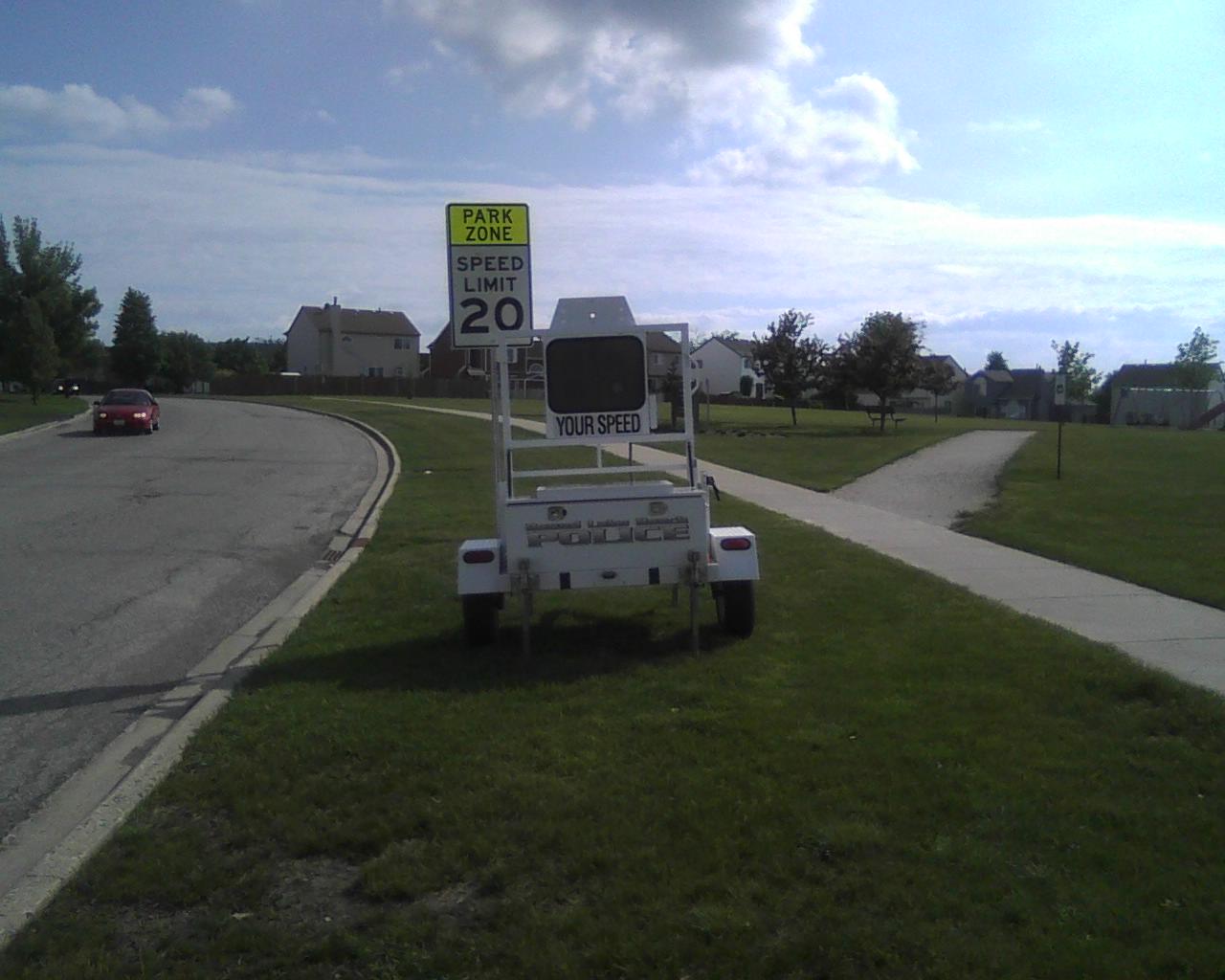
We might as well remove this sign at Orchard Park for the next few months as well. For all the reasons listed above, even though drivers know that they’re passing a park, there is nothing about the situation from their perspective which would cause them to naturally slow down (which good design would do).

Orchard Park Futility

Examples of these “traffic calming” techniques include:
– landscaped curb “bump outs” to help reduce traffic speeds and the distance required for a pedestrian to cross a roadway,
– narrowed streets,
– street islands (physical lane dividers) and marked, signalized crossings to enhance pedestrian safety,
– street trees, and…
– speed humps, or even better… raised crosswalks

There also wouldn’t NEED to be extra signage, radar-activated speed displays, and RLBPD speed-traps to remind drivers how fast they’re going if the traffic engineers (as part of the design team) were told that “Vehicles per hour” was NOT the most important design consideration for the middle of a residential area!

(Oh, for the “All they do is complain!” contingent, remember that a major part of all this is to raise awareness of just WHY our  problems of poor civic design are so bad (or even worse than we think), so that in the near future, as a community, we’re better able to discuss specific situations and better-appreciate possible fixes, especially as to why they’re worth the time, effort, and money!)

Over the next two months, drivers will come to know this as an acceptable (speedy) shortcut. Wait and see what happens when we add the Rt 83 and Rollins Rd detour traffic!

Comments?

Posted in Bicycling, Children, Planning, Walkability | 1 Comment

A Perfect Fit for Panera!

We need one of THESE…

Bike Rack

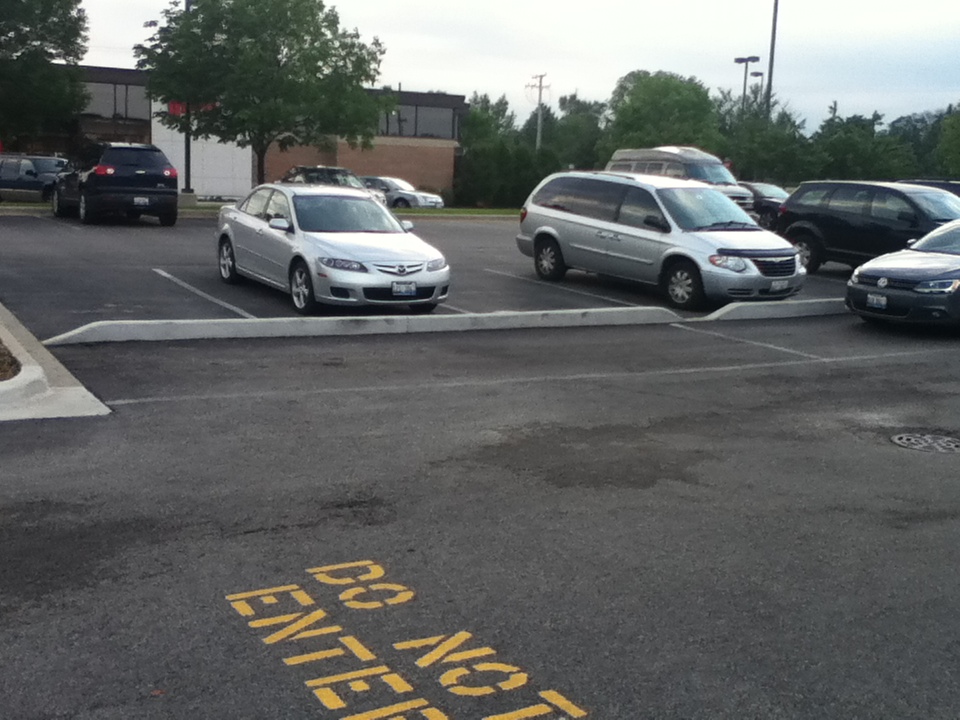
… in THIS space (a rather rare-in-strip-malls, wide-format parking space)…

Wide Parking

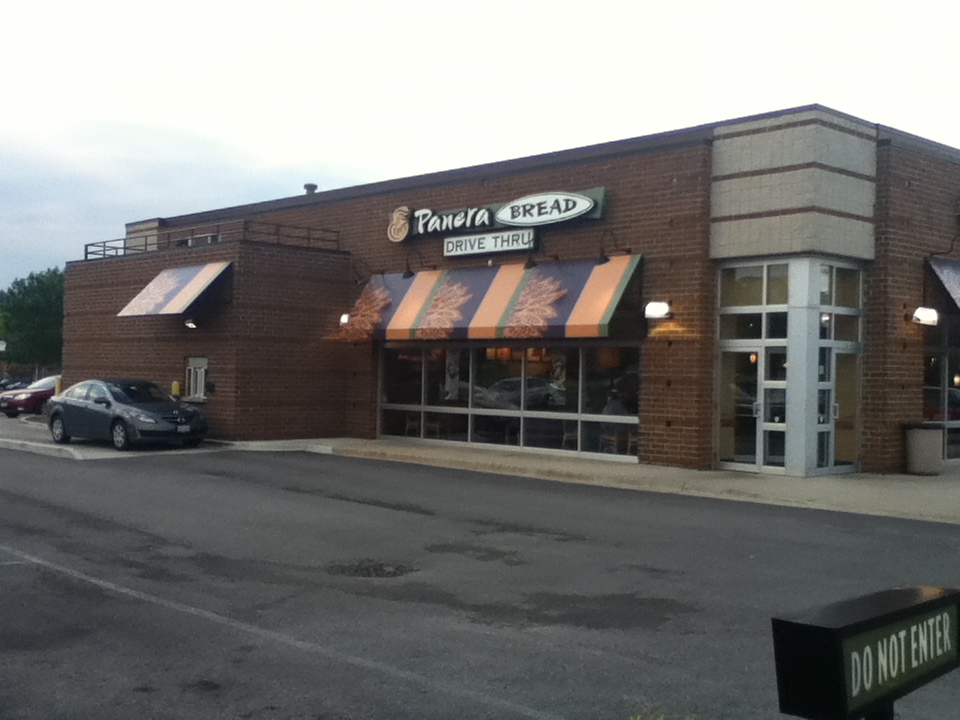
at THIS local business…

RLB Panera Bread

With so many meetings and “Let’s meet for coffee” going on at our local Panera bread, most of the cars we see bring only one person.
– One vehicle/one customer/one parking space.

The photo below shows that the fenced-off seating area does not provide a good perimeter for locking-up bikes; the curbing around the outside is too narrow, the near side (from this picture’s perspective) would have bikes interfere with door-clearance in the handicapped-parking space, and the far side places the bikes (and their owners) in line with traffic exiting the drive-thru. It also shows how conveniently-close the space for the bike-rack-to-be is situated!

Panera

At a meeting with the Village Board prior to approving construction of the drive-thru window, the owner(s) had to address concerns that there would still be sufficient parking… a valid point, since we’ve seen that parking is often near 100% capacity on busy/nice days. (Rather ironic, given all the ACRES of under-utilized parking right behind the building!)

If the Village Board is REALLY concerned about adequate parking, they would contact the franchise owner(s) and strongly encourage them to convert this parking space to bike parking. The space is directly across from the entrance; bikers would have to walk across a driveway, but it is “One-Way Only”…  enhancing safety with unobstructed sightlines and great eye-contact. Up to a dozen parking spaces could be made available to customers arriving by car if there was provision for customers on bike to securely lock up their rides… customers who currently chose instead to either drive and compete for parking, or if on bike seek another destination.

BTW: For winter cycling (Admit it, once the pavement and sidewalks are paved, they’re “bone dry”!), the bike rack can be configured for 3-season use. Removed to facilitate easy snow plowing, and the cyclists can use the then-unoccupied seating area as a “corral”.

In our view, it’s a Win/Win/Win:

– Business: Appealing destination to a greater variety of customers AND a reputation as a “bike-friendly business”
– Drivers: More available parking!
– Cyclists: A bike-friendly destination that’s worth going to! (It takes more than a bike rack to be bike-friendly, but Panera already offers all the rest!)

Posted in Bicycling, Business | Leave a comment

Round Lake Area Bike Racks

So maybe we talked you into dusting-off your bicycle and tooling around our village to see what it’s like on two wheels. Wouldn’t it be nice if you DID find someplace you wanted to go to, that once you were there you could secure your bike and have peace of mind about not having to walk home? Same here!

Bike Friendly DecalIf you’re a cyclist, you know that a “Bicycle Friendly” location is more likely to draw your attention. Likewise, if you’re a local business-owner (or manage a local Park District, hint hint!), you want to maximize your attractiveness to potential customers, in this case by being more accessible (and secure) and becoming a “Bicycle Friendly” Business.

So, a couple of days ago we headed out in different directions specifically looking for bicycle racks in the Round Lake area (OK, everybody was out doing chores that day anyway), with the purpose of letting you know where they are.

Presenting our public Google map of Round Lake Area Bike Racks!


The map above is a LIVE MAP! Zoom in and out, drag it to show different locations, and click on an icon to get more information about the location, and any additional info we may have about the rack or its setting.

If you would like to set this map to a bookmark / favorite, or send the link to a friend, please use the link below, which will open a new window, with its own dedicated web address / URL. The full Google Maps page will also have a text listing of all the locations, and a note from us:

Shortened:http://goo.gl/maps/Qd61a

We know that there are some which we missed on our first “go ’round”, and we hope that there will be many more added in the future. If you know of a bike rack which needs to be added to the map, please let us know! You can comment to this post, make a post on our FB page, or send us a message on FB.

https://www.facebook.com/reimagineRLB

Posted in Bicycling, Children, Economics | Leave a comment

To help you imagine…

Without even the wreckage of an old “downtown district” or village center from which to “re-build”, several residents have told us that they can’t even picture what a downtown here would look like, were there to be one in the wastelands between Kohl’s and the former Dominick’s grocery at Mallard Creek Shopping Center.

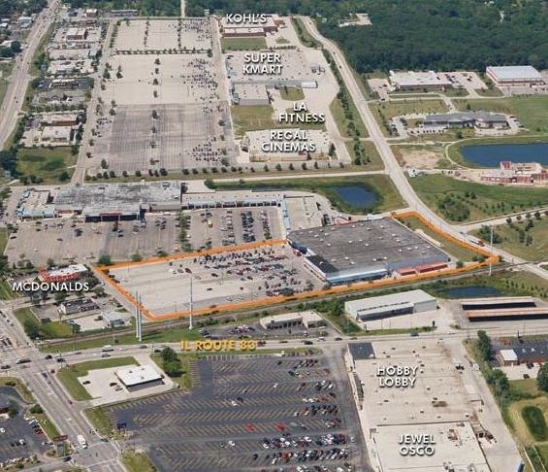
We’ll give you some help visualizing! First, here’s basically what we have now (slightly dated photo, taken just before the WalMart relocated). Notice all the parking which is unused, generates a minimum Return-On-Investment (ROI), and is not allowed to be used for anything else.

RLB_Downtown

Design note: Did you ever notice the change in contour in the westerly parking lot, that never-ending descent which often entices K-Mart shopping carts to just “run away” and smash into parked cars? There’s about a 50′ change in elevation from a high point on Orchard Lane (extreme top of the photo above) to the low on Mallard Creek Drive (just above the center).
– We’re in the third-flattest state in the Union; there are other municipalities in Illinois that would GLADLY throw us off a cliff just for just a fraction of the design potential we squandered by treating our last big buildable plot of land as if it was cheap and FLAT.

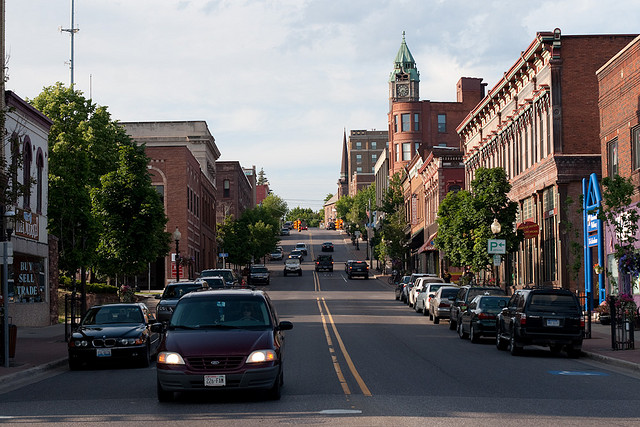
Even if the idea of “Placemaking” never existed, and the former Village Elders did no more planning than designating this property for “a downtown… one day in the future”, development there would have followed a completely different path, and our downtown would have probably have looked a lot like this:

Looking west. That would be Orchard Lane at the top of the hill; Regal Cinemas is about a half-block to the right of us!
[Source: http://www.flickr.com/photos/mkumm/3708293823/ ]

Think that’s unrealistic? We’re over 28,000 residents! In most of the world, we’re considered a “town”, based on population. [FYI: Illinois does not have population-based definitions of what constitutes a village vs a town vs a city…]

The larger ANY municipality gets, the more aspects, features, and PLACES it has in common with others of the same size. This is related to the axiom of “form-follows-function”. It’s what gives us a level of comfort when we travel… even to foreign countries. We know that even though there are difference, there are also things which have to be there, or accomodation made for in some way, shape, or form. Examples here include places to eat, market places/squares/plazas, public restrooms.

What economic and social opportunities are we missing by not having a traditional mid-west downtown? What types of businesses have simply bypassed us in favor of neighboring towns and villages because we don’t offer the type of environment in which they could succeed? Do you think the RLB Panera Bread (nice as it is!) would be the default “only place around” to hold small group meetings if a downtown were allowed to be? We’re the largest village in the cluster of what makes up the 2nd-largest population demographic in the entire county (following Waukegan/N. Chicago).

Won’t it be nice (and appropriate) to have  Round Lake Beach “grow up“?

P.S. The downtown photo above is of Marquette MI, population ~21,000. (There used to be a streetcar track running right down the middle of the street…)

Posted in Business, Downtown, Economics, Planning | 2 Comments

A Look at the “Replacement Generation” – I

As we examine policies and practices which guide planning and construction, it is critical that we consider “Why do we think the things we do?”, as embodied into Zoning, Codes, and Ordinances. Some of our actions are also the result of cultural and societal norms and practicies (even many of our beloved Chistmas traditions are based on invented folk traditions in stories by Washington Irving).

Viewed retro-actively with the programmers’ dictum of “Garbage-In, Garbage-Out”, we see that the “Baby Boomers” codified “bad thinking” and readily built un-friendly, sprawl-inducing, socially-deadening, economically-draining kitsch thinking all the while they  were doing something good because it “complies with code”.

'nuf said!

‘nuf said!

The “Boomers” are about to hit retirement-age en-masse, and turn over the reins of business and government to their “replacement generation”, commonly called “Millenials” (who will form one-third of the population by 2020). It is CRITICAL that current residents, business owners, developers and local government understands the difference in mindset, education, and expectations between the “Archie Bunker” crowd and that of the younger people.

TaskRabbit: ebay for chores, and Extra Income in the New Economy!

TaskRabbit: Kind of like ebay for chores and errands; a way to earn Extra Income in the New Economy!

This difference has already led to conflicts in the business world, academia, and civic life, with differing expectations of levels of performance, of the role of training and education, of rights versus responsibilities, of sustainability and stewardship… down to the level of what can be done with privately-owned property. These difference and the changes they engender have created a lot of “angst” among the more senior crowd who have grown up with a fixed world-view and concrete expectations of things like “property value”.

“It’s important to realize that young people entering the corporate world now are the product of a very different upbringing than any prior generation. Having been educated on a planet that is newly and deeply networked geographically, economically, and informationally, we have had to adapt to unprecedented speeds of intellectual paradigm shifts and scales of competition. The way we think, the way we learn, and the way we work have been fundamentally transformed…”

Millenials can certainly be “Team Players” but if they see something that looks amiss, they’ll be much more likely to speak up about it. This can appear “confrontational” to Village Board members who were raised to say at least three nice things about a subject or person before saying anything bad about them.

“Liberal arts curriculum promotes challenging established thought and systemic stagnation. We are taught to think that, if something has been a certain way for very long, there’s a good possibility that it’s no longer good enough. Moreover, even before we’re ready — perhaps especially before we’re ready — we attempt to contribute solutions to these potential problems in our academic work.”

There have been enough “old school” people, places, and procedures around to accomodate the Boomers, who spent their entire lives chasing the American Dream (as presented to them by the financiers Wall Street and the hucksters on Madison Avenue)… but they are running out of places to hide, where they can reassure themselves that the measure of their lives can accurately be assessed by the size of their homes and how much stuff is in them. “Change” is now very hard for the Boomers;  change which forces them to admit that maybe they were wrong in some critical worldview or socio-economic outlook… even harder.

“Much of what prior generations have learned through work experience and apprenticeships, we have learned in ways that are not so easily reflected on a curriculum vitae. Our incisive questioning can challenge years of established thought and impel costly change. But this cannot be mistaken for naïveté. It is real, forward-thinking insight.

We Millennials are not used to taking little steps and gradually wading into an ocean of knowledge; we’re accustomed to diving in head first, rapidly adjusting, taking ownership of our successes and failures. We’re a generation with a new work ethic and tremendous potential…  That young people all over the world are creating brands and technologies that challenge and overshadow decades old institutions — this startup revolution — is evidence enough of the great power of Millennial thinking.”

Their independent thinking, their “visioning”, is not burdened by being vested in “keeping things the way they are“. In terms of municipal planning, building community, actually “living” instead of just “making a living”… they see clearly what we left behind when we as a nation abandoned planning for PEOPLE.  They value “walkability” and the ability to connect, having “places”, they grew up hearing about depletion of natural resources, about pollution and the impact on the environment, they care about the ethical treatment of our food animals, and thanks to their comfort with the internet and connections to people the world over, they KNOW that we can do better than becoming a “Suburban Nation“.

SideCar is a real-time ridesharing community that connects drivers with spare seats in their car to passengers who need instant rides, via a user-friendly proprietary smartphone technology. It helps drivers because they use their own car and help cover the costs of maintenance - all while meeting people in the city. Meanwhile for passengers it makes it easy to get a ride, cheaper than alternatives, and gives them a unique personal interaction.

SideCar is a real-time ridesharing community that connects drivers with spare seats in their car to passengers who need instant rides, via a user-friendly proprietary smartphone technology. It helps drivers because they use their own car and help cover the costs of maintenance – all while meeting people in the city. Meanwhile for passengers it makes it easy to get a ride, cheaper than alternatives, and gives them a unique personal interaction.

“What if the Millennials’ aversion to car-buying isn’t a temporary side effect of the recession, but part of a permanent generational shift in tastes and spending habits? It’s a question that applies not only to cars, but to several other traditional categories of big spending—and its answer has large implications for the future shape of the economy.”

Zipcar1

Zipcar: One of the leading car-sharing websites, and part of what makes it possible to live without actually OWNING a car.

Will the Millenials, as the bulk of our future middle-class, WANT to stay in Round Lake Beach to raise their families? Will our village have what it takes to compete against other locales, and successfully lure new businesses and families which will call this home?

If nothing major changes in our infrastructure or mindset against planning, we will have a highly-challenging time in any time of poor economy, (not to mention getting through the additional hit on our local economy expected to be caused by the Rt. 83/Rollins Road “Gateway” Project).

Forbes.com Link: “Millennials Are Redefining Work, Corporations Should Take Advantage
Inc.com Link: “Why Gen Y Doesn’t Care About Cars
The Atlantic Link: “The Cheapest Generation – Why Millennials aren’t buying cars or houses, and what that means for the economy

Posted in Business, Economics, Planning | Leave a comment

Localism 101: Investing

What should we do to help build our local economy? What CAN we do? Have other communities made helpful changes that we can do here as well?

Before we run out and maybe make a mistake because we just “Have to do SOMEthing!“, we should also understand why we’re doing it, and the consequences of doing it wrong. The previous Village administrations weren’t wrong in inviting retailers in to give residents places to shop, or in expanding residential areas to invite taxpayers  homeowners, or reserving property to be designated as “Open Space”. But without the “big picture” (in this case a framework for village growth), the result is like mixing food ingredients at random and then wondering why the meal doesn’t taste good.

“Localism is about building communities that are more healthy and sustainable – backed by local economies that are stronger and more resilient. It means we use regional resources to meet our needs – reconnecting eaters with farmers, investors with entrepreneurs, and business owners with the communities and natural places on which they depend. It recognizes that not one of us can do it alone and that we’re all better off, when we’re all better off.

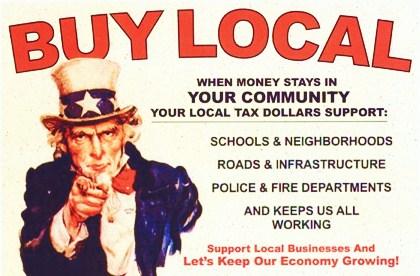
Poster - Buy Local

Localism is about building the New Economy, right where we live. It starts with expanding and diversifying local ownership, import substitution, and business cooperation in a particular place, and results in more wealth and jobs per capita, and in greater personal accountability for the health of the natural and human communities of which we are a part. The goal is real prosperity – for all.”

The Buy Local Movement has really been picking up steam over the last few years, reinforced by a parallel Buy American ethic as well. Feedback shows that while spending a greater percentage of your hard-earned income local DOES have a positive impact on the local economy, that alone is not enough if local ownership of businesses is low.

[This quoted section added 4/26/13]: “Cities where small, locally owned businesses account for a relatively large share of the economy have stronger social networks, more engaged citizens, and better success solving problems, according to several recently published studies.

neighborhood-stores

Walter Goldschmidt, a USDA sociologist, produced a groundbreaking study comparing two farming towns in California that were almost identical in every respect but one: Dinuba’s economy was composed mainly of family farms, while Arvin’s was dominated by large agribusinesses. Goldschmidt found that Dinuba had a richer civic life, with twice the number of community organizations, twice the number of newspapers, and citizens who were much more engaged than those in Arvin. Not surprisingly, Dinuba also had far superior public infrastructure: In both quality and quantity, the town’s schools, parks, sidewalks, paved streets, and garbage services far surpassed those of Arvin.

Two other sociologists, C. Wright Mills and Melville J. Ulmer,  undertaking a similar study conducted on behalf of a congressional committee… found that communities comprised primarily of small, locally owned businesses took much better care of themselves. They beat cities dominated by large, absentee-owned firms on more than 30 measures of well-being, including such things as literacy, acreage of public parks, extent of poverty, and the share of residents who belonged to civic organizations.

We have a high percentage of franchises in RLB. They are a valued part of our local economy and local life; we certainly aren’t complaining about them as partners in our local business climate. BUT… part of owning a franchise is paying “franchise fees”, which are sent out of our village to the “corporate office” far away. That’s money  spent locally, but it doesn’t benefit us the same way as if it were a fully locally-owned business. A greater percentage of locally-owned businesses could help offset that (and the success of that is impacted by how “small business friendly” our infrastructure is).

Our zoning currently favors physical structures which are difficult for small-businesses and start-ups to get a foot-hold into. By design our system favors strip-malls and shopping centers, which themselves implicitly favor franchise operations.

“Small-businesses are the backbone of the American economy, generating 80% of jobs and half of the GDP. They also create the foundation for strong, diverse neighborhoods and strong local economies.

So why are we starving these vital enterprises?

“Locavesting” is a call to re-think the way we invest, so that we support the small businesses that create jobs and healthy, resilient communities.”

In a previous post, we mentioned local businesses in a community setting up a “Business Incubator” program, using a public market as the venue. Here is another way the Chamber of Commerce can step in and, in partnership with local residents as investors, work to make conditions more favorable for locally-owned businesses:

Group buys Adrian  building in ‘locavesting’ venture

ADRIAN MI: A group of 22 investors has bought the building at 120 E. Maumee St., inspired by a speech last October at the Adrian Area Chamber of Commerce Economic Club luncheon.

Don Taylor, one of the investors, said he and three other people got together after the speech by Amy Cortese, author of “Locavesting: The Revolution in Local Investing,” and talked about how they could invest locally.

“The whole concept is to engage more people in the economic life of our downtown,” Taylor said. “Quite frankly, it wasn’t hard at all to get a large number of investors”.

The group will upgrade the vacant spaces in the multi-use building (retail AND residential) and bring it up to 100% occupancy. Typical in this category is a local business association renting vacant space at a discount. They then help local start-ups (by lowering the barriers to entry): providing retail storefront space at a substantial savings (for a set period of a couple of weeks to several months), along with experienced marketing and business advice. Property owners have higher occupancy, customers have more stores to patronize, and there’s more “life” in the area, which itself attracts even more people to the area.

LeesburgVA

Our challenge with implementing such an idea locally is not so much finding investors and business partners as it is in finding suitable places in which to invest (that’s where our lack of a downtown comes in).
We would like your helping in finding such places!

With local ownership comes local accountability; when you live in the community where your business decisions are felt, you have the understanding to make better decisions. Having a larger density of locally owned businesses results in higher per capita income, more jobs, and greater resiliency in the local economy. Plus more people living in their true vocation, with meaning and purpose, is good for all of us.

The blazing economy of the 1990’s won’t be back anytime soon (given the debt/credit crunch and collapse of the housing bubble, it may never be back). We MUST focus on our local economy and community. If the economy at-large continues to stagnate, we have to depend more-and-more on the local situation for our jobs and livelihood. Should the economy somehow come roaring back to life, we will still be better off with a robust local business community, in a village that’s interconnected, liveable, and has a high-degree of self-support (by design).

Do you see any current opportunities for us to invest in ourselves?

Link: “Group buys Adrian building in ‘locavesting’ venture” [Daily Telegram, Adrian MI]
Link: “Localism 101” [The BALLE Group]
Link: “Locavesting: The Revolution in Local Investing” [Amazon.com]
Link: “Locally owned businesses can help communities thrive” [Grist.com – Added 4/26/13]

Posted in Business, Downtown, Economics, Planning | Leave a comment

A Local Farmers’ Market as a Business Incubator

Business Incubator (Wikipedia): “Programs designed to support the successful development of entrepreneurial companies through an array of business-support resources and services.”

“Business Incubation” programs are popping-up all over the country as local Chambers of Commerce, Business Associations, municipal governments and residents are all coming to realize that there’s more to making a place “business friendly” than simply designating an area as “Commercial” and plopping down another strip-mall. New businesses sometimes need a “leg up” to get started; these programs offer a variety of options and resources to those just getting started. 

[Photo: Flicker]

[Photo: Flicker]

A typical hurdle new small-business owners face is the belief that they have to acquire a store-front, a “brick-and-mortar” location at which to set up shop (not everything can be done over the Internet). Unfortunately, these same start-ups must focus their scarce resources towards initial purchase of equipment, supplies, training, etc., and are often not financially-prepared to plunk down the cash for purchase (or rent) of a space, which even then must be furnished, be made ADA-compliant, pass local inspection(s), pay for utility deposits, obtain business licenses, insurance, etc.

Sometimes (especially in towns with a surplus of vacant retail space) the local merchants and government will negotiate with property owners to make business space available at VERY reasonable rates for short terms (up to 6 months). [We’ll look at this as an option for RLB in a future post, but the RLA Chamber of Commerce can start looking now!]

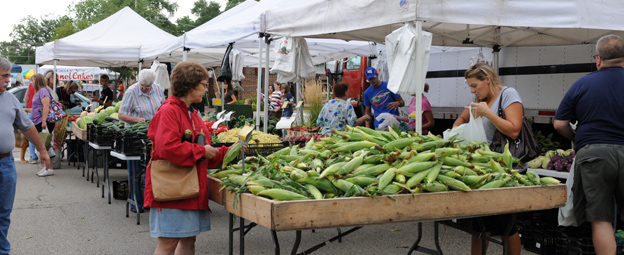
Another model which can minimize overhead costs is the traditional Farmers’ Market.

FarmersMkt-Gryslk

USDA: “Farmers markets are a unique business structure: lower overhead costs and direct and valued contact with their customer base make for innovative and responsive farmers that can experiment with offering new items more easily.  If a producer is able to find the right product mix for consumer demand, they can develop a sound business, create new jobs, and grow successfully.”

The “nay-sayer” will point out that the market segment (Food!) represented by Farmers Markets is too narrow to support other types of products and services. True up to a point, but that’s largely up to the organizers of each Farmers’ Market and what they stipulate the overall and/or specific make-up of vendors and their products should be. If they require that at least 90% of every vendor’s offerings be edible, then yes, we’re looking a a very-traditional format…

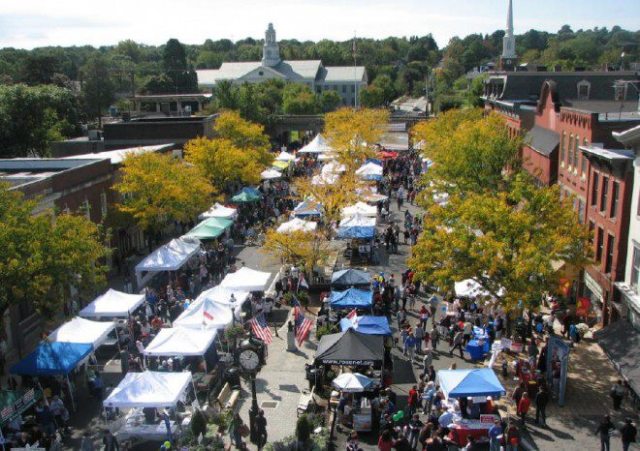
On the other hand, OURS could have the flexibility of having a set percentage of spaces for new business start-ups specifically for helping to give them a start and exposure. This  format would be more of a historical “Open Market” where food vendors are mixed in-and-amongst purveyors of clothing, crafts, services, and whatever else.
This could quite literally be a “Pop-Up Downtown”!

734612419_n

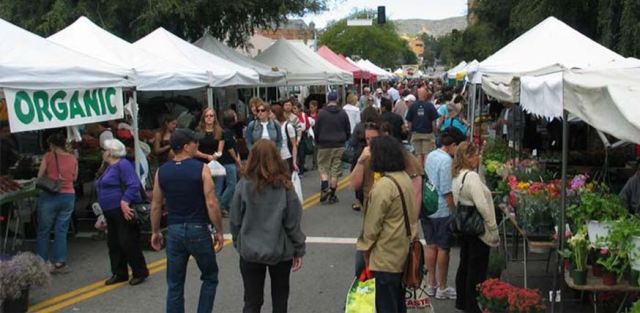
“People interested in opening a small business usually consider opening a store front as their only option. A storefront can be very expensive to a new business owner and might be more square-footage than necessary. By contrast, renting a booth space at farmers’ market can be much more affordable – anywhere from $15 for a half day market up to $75 (or more) for an eight-hour market. One space is usually 10-foot x 10-foot and the vendor should invest in a tent, some tables, display fixtures, and the proper licenses and insurance.

A farmers’ market (on a small scale) can be a real-world training ground for a fledgling business owner to develop and hone sales and promotion skills. The farmers’ market operates as a business incubator, with vendors setting up each week to sell their products and learn from the customer interaction and feedback.”

The greater the settings and locations the community at-large can provide, the more diverse the resulting business climate can be. Right now we’re limited in what we can offer customers because we’re limited in what we can offer businesses!

If all we offer is strip-malls and shopping centers, we naturally attract those types of businesses, but tend to drive away other types… including the essential “entrepreneurs” whose businesses thrive in the company of others like them, several small shops with a wide variety of goods and services, in close proximity, in a pedestrian-friendly environment. (Sounds like a downtown!) Places which lure customers in with an enticing aroma or sounds of music out the front door, sights through the front-windows of diners enjoying a meal (or maybe at an al fresco sidewalk cafe), unique shops which aren’t suited to franchises, or which really do benefit from being a little “hole in the wall” shop.

Without a traditional downtown, their entire client-base is under-served. A “marketplace” comes in as a close second, and we should seriously explore that option.

FarmersMkt-Hollywood

A significant advantage of experimenting with a pop-up market (of whichever model) is that the economic risk to the Village and the other merchants is very low. If the market proves popular, and the public perceives it as a worthwhile “place” to go, then the value and reputation of the area increases. If the market does not prove popular for whatever reason, costs to dis-establish it are minor, and lessons can be learned for future planning.

Resources and additional reading:

Link: Farmers Markets as Small Business Incubators (USDA)
Link: The Farmers’ Market – a Small Business Incubator
Link: Farmers’ markets fertile ground for new businesses

Posted in Economics, Farmers' Markets, Local Food Production | Leave a comment

Webinar: Maximizing District-wide Impact of Safe Routes to School

Webinar: “Maximizing District-wide Impact of Safe Routes to School: Educating Student Transportation Departments”
When: Thurs April 18, 2013 / 1:00pm – 2:00pm CST
Cost: FREE, but online advance registration is required. Login instructions will be sent upon registration!

Helping your school district implement more safe routes to schools can save schools money, decrease traffic, and improve children’s health and community safety. This webinar will teach you how to work with your school district to improve policies and programs related to Safe Routes To Schools.

Webinar Description: “Student transportation departments spend their days working to get students safely to and from school, but historically have focused on busing and driving. Safe Routes to School can easily support district transportation departments in identifying ways to safely get children active while commuting to school, while decreasing traffic congestion during arrival and dismissal periods.

In light of major funding cuts for both busing and walking programs, as well as concerns about childhood obesity rates, district transportation departments and Safe Routes to School can work together to improve policies and programs to help schools save money, decrease traffic, increase community safety and improve the health of children. Join us for this hour long webinar where we’ll explore strategies that district transportation departments are currently employing to include walking and bicycling to school in their day-to-day work.

SPEAKERS:
• Dan Pires, director of operations, transportation & risk management, Eureka City Schools
• Peter Hurst, transportation options program specialist, Boulder Valley School District
• Dave Cowan, program manager, Safe Routes to School National Partnership

This free webinar is part of a series of monthly National Learning Network webinars on topics related to Safe Routes to School and other policy and program initiatives that can increase walking and bicycling to school and in daily life.”

Link to info/registration: Maximizing District-wide Impact of Safe Routes to School: Educating Student Transportation Departments 

Posted in Bicycling, Children, Meeting / Webinar, Walkability | Leave a comment