Webinar: Building Community Resilience Through Courageous Storytelling

Webinar: “Building Community Resilience Through Courageous Storytelling” When: Thurs April 18, 2013 / 1:00pm – 2:15pm CST
Cost: FREE, but online advance registration is required. Login instructions will be sent upon registration!

Webinar Description: “A shared story and history that gives a community a sense of itself — its struggles and lineage — can be an important source of resilience. From its own experience, a community can draw examples and role models for bouncing back from hardships. In this tele-seminar, we will explore ways of developing our story as communities in transition, and how important fresh narratives can be for unleashing a coherent “transition town”  initiative. Various guests will join the conversation.”

Words like “narrative” and “dialogue” can sound a bit wishy-washy when you and your family are doing all you can to make ends meet in this challenging economy. We ARE however, for better or for worse, part of our community… what we think of it, what OTHERS think of it, what it can actually do, and what we can do for it.

Without a strong local history or dominant culture to give us a sense of identity, we should at least have something we’re working towards to BUILD identity, spirit, a sense of community, having something here worth belonging to. The cost of NOT having that includes less desire for families and businesses to invest here, and less reason for our young adults to stay after they graduate.

We should have an answer for:

  • “What does it mean, to be from Round Lake Beach?”
  • “What are the goals of the Village, its ideals?”
  • “Does it hold itself in high-regard; what do its neighbors think and how did they get to their conclusions?”
  • “What does the future hold for Round Lake Beach on its current path?”
  • “Do we WANT that?” “Can we change that?” “How?”

Link to info/registration: Building Community Resilience Through Courageous Storytelling

Posted in Community, Meeting / Webinar | Leave a comment

Own The Sidewalk

This post, written by Joe Nickol, co-founder of StreetSense.Org, stands on its own (we don’t normally post an ENTIRE piece by some else) as to the critical role that working sidewalks serve in municipalities of ALL sizes. As we complete the build-out of Round Lake Beach over the next few years, our focus will naturally shift inwards to the places which don’t work well or will be more valuable as re-built as something else.

We must keep streets and sidewalks in mind as we plan for the future. NOT as “cookie cutter” elements to toss-down to say we have them, but as essential elements of infrastructure for community, business, and connectivity. Our existing “Sidewalk Plan” does call for sidewalks where there are none now, but few lead to places worth the walk.
————————————————————————————————————————————–

“Own the Sidewalk”
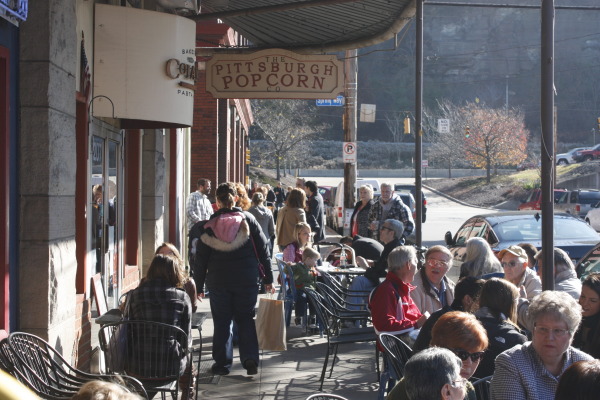
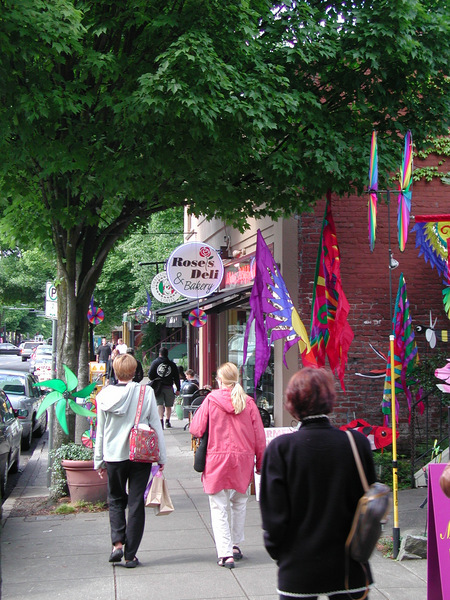
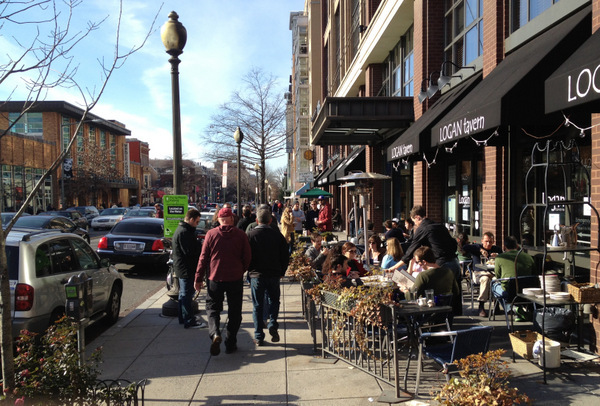
Do you see those jackets and windbreakers? It’s chilly outside, but these folks have a “place” where it is worth sitting outside in other-than-perfect weather.

Getting the little things right

The primary type of public space in the United States is the street. It has been the long-standing breadwinner for our economies in providing that rich exchange between customers and merchants, ideas and entrepreneurs, and people and another. Streets are not static or, like our cities themselves, ever complete.

They begin as an idea about creating access and value to land and grow from there. They continue to evolve as the enabler of great urban life. At that exact point where the value creation happens–the building face–is the most energetic. Like creeks and rivers, these contact points with the “shore” create eddies of activity. As our streets became laden with faster and larger vehicles, we zoned that activity into a separate space: the sidewalk.
Roses1

The sidewalk is often overlooked. Before they were installed in cities, they simply were the areas not defined by ruts in the road. With needs changing, they gradually got elevated out of the muck (streets were once de-facto sewers) and congestion of the road. Eventually more and more stuff got layered on: the poles, benches, kiosks, bike racks, signs, sales racks, trees, lighting, planting strips, and so on. When the city became too much for people and the car and its supporting policies allowed the city to be drained, sidewalks went with them, changing forms to fit into a new, lower-density context. Still, they became the point of active interaction between walkers and people sitting on porches or passing by. They were critical for allowing kids to safely get to school, dad to get to work, and mom to get to friends and errands.

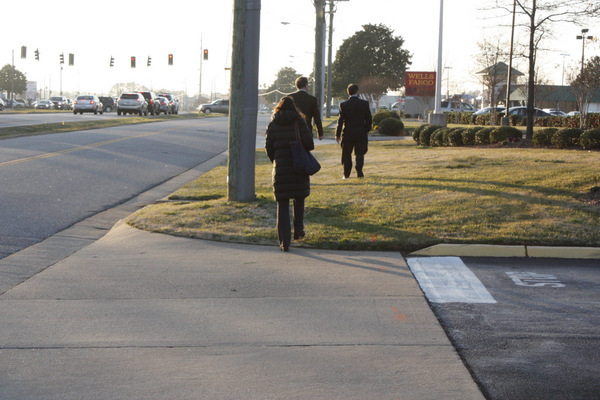
But over time the sidewalk was value-engineered out of our subdivisions. Counties and other exurbs simply did not see the value in providing auto-only development with sidewalks that, in the end, only created a distraction for traffic. So they went away. Much development in the sixties, seventies, and eighties in this country can be seen without a sidewalk or, at best, a broken patchwork of sidewalk segments.
2029PhotoHilltop416

As the true cost of those choices become clear, we are now reorganizing ourselves along more time-tested and solvent patterns of building. The street once again has become a prime topic of attention and detailing in the creation of new urban and suburban development. But the transition has not always been smooth. At no small expense to those building and maintaining them, “Complete Streets” have been developed, offering a place for everyone so long as everyone stayed in their designated place. The walkers had their path, the bikers theirs. Cars were free to move at any speed (typically 45 MPH) and their was ample room provided tree lawns, planting strips, swales, and other devices meant to provide urban canopy, deal with stormwater in situ, and literally green up the thoroughfare. The “complete street” phenomenon is but a stopping point on our way back to street sanity.

For it is at this point in time that we are starting to learn about that original concept of streets and what they must provide in a solvent, vibrant, and resilient place. We are seeing once again that a complete street is not a 200-foot “Cadillac” street section with every single device and street gear built in but a much simpler construct. It is not $3,000 a foot, it is $700 a foot to build. In the end, it is about creating value.

And it is here where the role of the sidewalk comes into focus and where the activity between public and private realms takes root. No longer can sidewalks be “value engineered” out of the equation, disconnected or relegated to a single use. Layering design functions is critical to achieving the value they provide. They can be broad or intimate; flush to the street or raised; and shaded by galleries, awnings, arcades, or street trees. Sidewalks can be eaten upon, have chairs set up in them, performances performed in them, be an extension of a sales floor, or simply a place to stroll and window shop. They can be the safe route to school or a means to patrol the neighborhood. They can be urban or they can be in less dense areas. They are our most straight-forward and economical health care plan.

Whatever the case, we must once again “own the sidewalk”.
2066PhotoLoganC037

Article Link w/additional photos: StreetSense.org – “Own The Sidewalk”

Posted in Bicycling, Children, Community, Economics, Planning, Seniors, Walkability | Leave a comment

A Short To-Do List

If you’ve been “stuck on the treadmill” as a dedicated earn-and-spend consumer for so long that you’ve forgotten how to “live” for yourself and loved ones, this graphic will give you a start.

Yes, it a list of “Do’s”, but enough of them (and things like them) will help you transition from “Doing” to “Being”…

1707717410_nP.S. Fixing our infrastructure so that it is physically POSSIBLE to behave more like a community will be very helpful as well!

Posted in Community | Leave a comment

Density Done Well

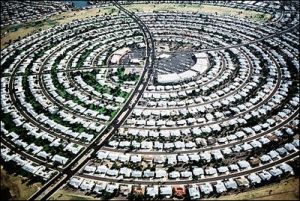
One reason so many people have been attracted to (the idea of) the suburbs is to “get away from the crowds” in the cities. The American Dream came in a lot of flavors, and most of them included the idea of a larger lot to give you “room to breathe“, a “taste of the country, with the convenience of the city“, etc.

Waterloo_Sprawl

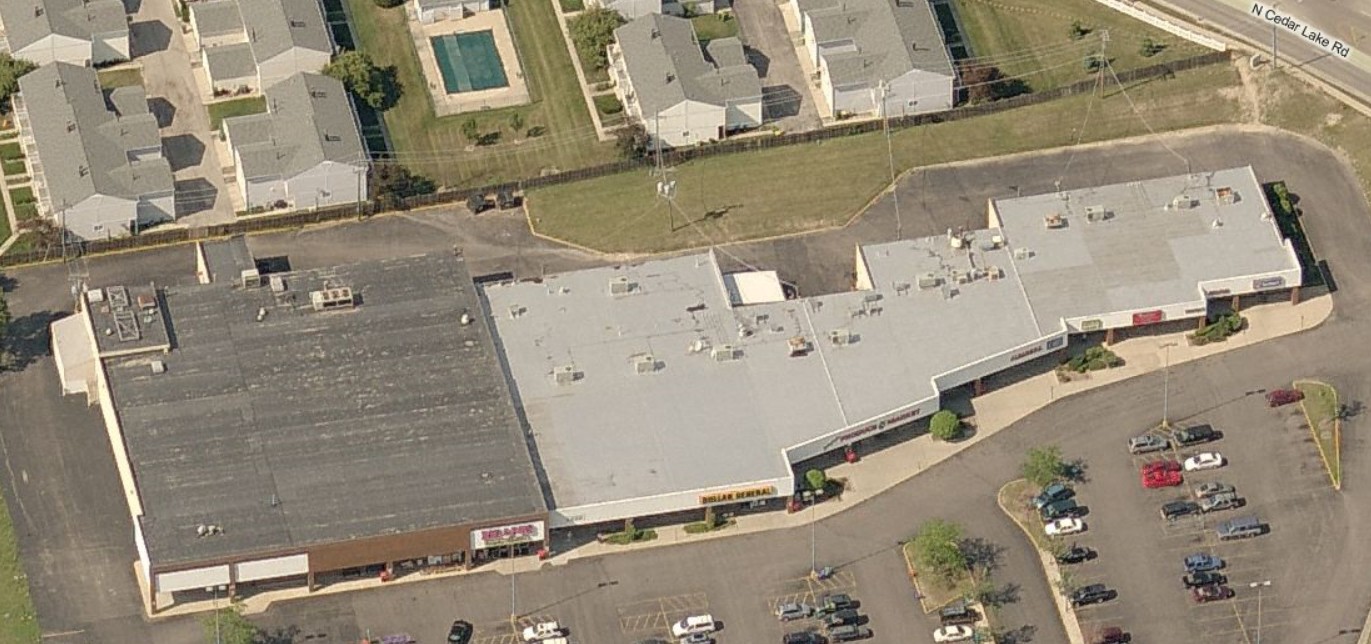
Problem is, all that “room” pushed everything farther apart, including you from neighbors, merchants and much of civic life. Walkability went WAY down, sidewalks often were not installed at all, and “Zoning” insisted that there be a fence between your house and the stores right behind you… turning what would have been a nice short walk into a drive (again).

Our own "Eagle Creek Shopping Center"! The fence continues to the west for the length of the housing complex!

Our own “Eagle Creek Shopping Center”! The fence continues to the west for the length of the housing complex!

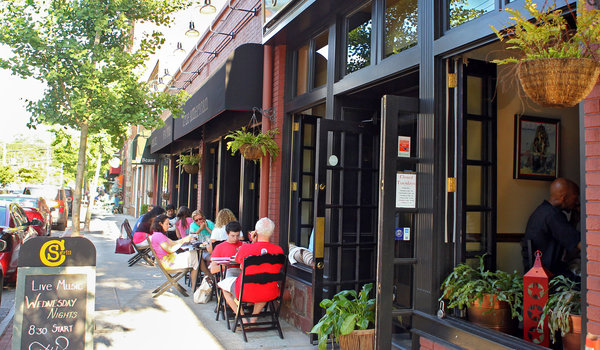
Believe it or not there is “Good Density“. You even pay to intentionally experience it when you travel on vacation or as a tourist. Quaint little villages in Cape Cod, Times Square in New York City (recently made even MORE pedestrian friendly!), funky hillside neighborhoods in San Francisco, mountain villages in Bavaria, ocean-front island towns where cruise ships pull in for a day or two at a time. Not that we have to travel that far… been to downtown Antioch, Libertyville or Lake Forest lately?

See if this does anything for you:

“We agonize over the quality of amenities that make density livable and sociable, like parks, community and cultural places, schools and child-care, and local “third places” such as grocery stores, cafés and pubs. We design an inviting city for walking, biking and transit, not just because these are green and healthy, but because they’re inherently social. We require homes fit for families, as well as provide rental and social housing, for diversity and mix.”

Photo: NYTimes.com

Photo: NYTimes.com

“All of this fits into a framework and ethic where density is used not to maximize real estate profit, but to achieve outstanding public life, and hopefully neighborliness, with successful, authentic place-making. Density that works because people love it.”

Does that sound like what our Village Elders committed to when dealing with Real-Estate Developers who wanted to build in Round Lake Beach over the last several decades?  [Hint: “No!”] We do know (because we asked) that they cared about “building the tax base” and “providing retail opportunities for our residents”, things like that. Sensible, modern concepts.

“To be sure, there are a lot of bad examples of density out there. Sites that are overbuilt, disconnected from context or place, without design, mix, amenities and respite. People don’t love this kind of density, and the fear of bad density tends to lead to controversy and less community acceptance of densification in general.”

Sounds more like what happened here.

Even in the suburbs or small-town America, you WANT density in the places where it makes sense. Village Centers, a downtown/shopping district with a sense of “place and restaurants and benches for sitting and public art and touchable history and sidewalk vendors and nooks & crannies to discover and 2nd-floor residences over the stores and a square or plaza for celebrations & concerts and… well, a lot more. These are among the “universal” aspects of successful municipalities, regardless of size or where in the world they are. It’s NOT just something for “big cities”. Main Street USA is iconic for a reason!

Think of the satisfying “in-town” experiences you’ve had in your life; were they in a town that “rolled-up the sidewalks” when the stores closed, or someplace that had a “critical mass” of people engaged in a variety of different things all at the same time?

“You can double the density of people in a public place by doubling the number of people who seek it out, or by doubling the length of time they stay. Great places are both initially attractive, and “sticky” once you get there. A place, or a community or city for that matter, is sticky if people love it, and don’t want to leave.”

As we look to the next 75 years of Round Lake Beach, where will our “good density” be? Where will be our gathering places, our “living room of the neighborhood”, the heart-of-the-community, the place you bring your guests when they ask “What is there to DO here?“, the spot where it is just fun to hang out and watch the life of the village carry on before your eyes? Our 28,000+ residents not only need such places, but can make them happen!

Entire Article: Density, Neighborliness, and the Concentrated ‘We’

Posted in Planning, Walkability | Leave a comment

Bicycle Tourism I

What’s the potential for Round Lake Beach to capture a piece of the “Bicycle Tourism”  action once both of the following are finished:

– the Rollins Road & Rt. 83 interchange work
– Millenium Trail (and connectors)

It’s not too early to think about this. It’s also not too silly to think about this, even though our much of the village isn’t even set up yet for its own residents to effectively (or safely) cycle about.

Why should we bother? Well, for a couple of reasons, foremost being that Lake County receives over $1 BILLION per year in tourist revenue! How much of that do you think Round Lake Beach generates?

What do we currently have that draws tourists our way? Mostly we have our STROADS, which are lined with strip-malls and shopping centers, each of which comes with their own franschises and eateries like Applebees, Chili’s, Buffalo Wild Wings, Wendy’s, McD’s, Taco Bell, etc., etc. Oh, and can’t forget our Wal*Mart! Not a lot for traditionally “touristy” stuff though like historical sights, scenic vistas, bustling “arts district”…

We support the tourists by taking care of some of their needs while they’re on the way to where they REALLY want to go, but are not really drawing them here. 

As far as the whole idea of our village seriously addressing “Bicycle Tourism”…

  • What is the “big picture” for current and future bike tourism in our part of Lake County? Does it represent enough $$$ for us to even bother?
  • What are the typical needs of bike tourists, and what are some of the ways we could (profitably) meet these needs?
  • What are potential areas of “overlap”, where improvements & policies which benefit these visitors could also benefit our own residents who would like to get about town or get some exercise without HAVING to use their cars?

Municipalities all over the country are discovering the economic benefits of becoming "bicycle friendly". [Photo: SF Chronicle]

Municipalities all over the country are discovering the economic benefits of becoming “bicycle friendly”. [Photo: SF Chronicle]

We’ll discuss this over several posts, but here’s something to get the ball rolling:

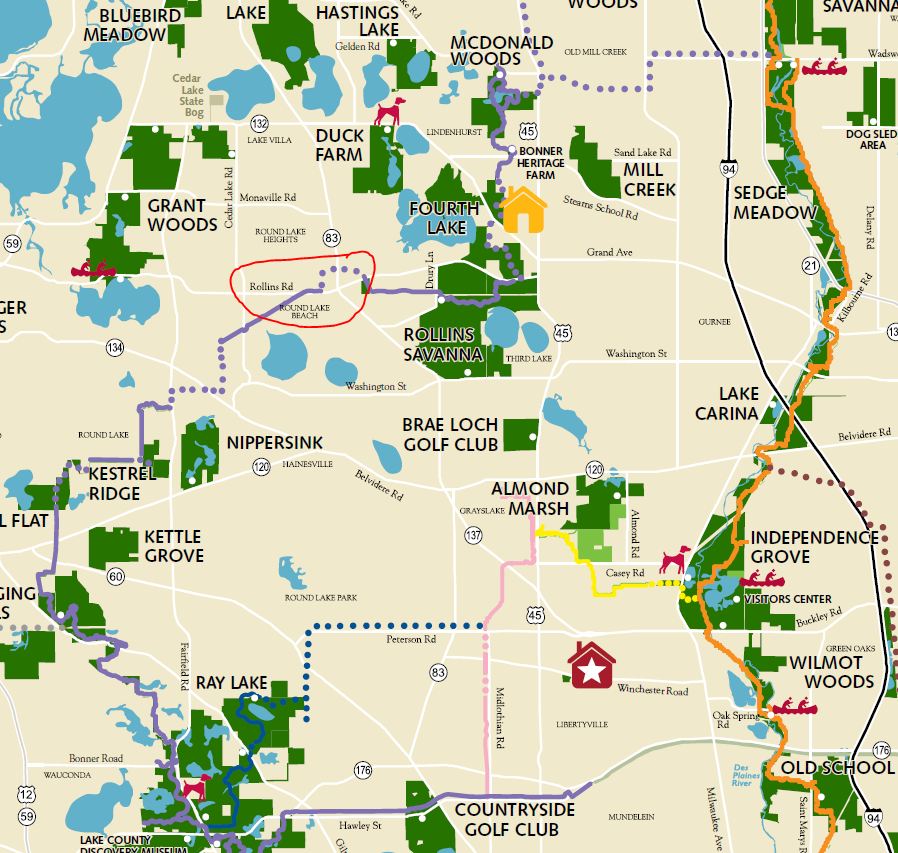
Lake County Forest Preserve District's (LCFPD) Trail Map, showing Millenium Trail in purple (Solid=current, dotted=planned)

Lake County Forest Preserve District’s Trail Map, showing Millenium Trail in purple (Solid=current, dotted=planned)

Under construction for several years, the Millenium Trail is a planned 35-mile loop through central, western and northern Lake County that will connect to other trail systems. This is a “God-send” to cyclists in and around Lake County, who are often challenged in finding decent day-trip length trips. Trail-riders typically ride between 20 and 50 miles per day; family groups tend toward the lower end, solo riders/small groups favor greater distances.

What makes this exceptionally-interesting for us in RLB is that the trail goes through only a couple of developed areas: Mundelein in the south, and then RIGHT THROUGH OUR CENTRAL BUSINESS DISTRICT! So with that in mind:

From “Transportation Issues Daily“:

“Emerging Trend: Bicycle-Friendly Business Districts (BFBD’s)”

“BFBD’s – Districts where merchants actively encourage people to bike to area shops and restaurants, and where merchants and employees often ride, too.

One of the best things about BFBDs is they can be created by business associations fairly quickly and often at very low cost. Some things are even cost-free.”

How many of our eateries offer a bike rack? [Photo: Flicker... click to see original]

How many of our eateries offer a bike rack? [Photo: Flicker… click to see original]

From “Americal Trails”:

“Bicyclists Bring Business! As with other tourists, bicyclists represent potential customers who can bring revenue into your community by patronizing businesses that meet their needs and contribute to their overall desired experience. And when a particular bicycling destination is so appealing to bicyclists that they will come from some distance away to enjoy it, the dollars they bring with them can be significant.

There are some characteristics of bicycle tourists that make them an attractive audience for your marketing efforts: They are, on average, well-educated older adults (35+) from upper-income households. They typically travel in groups of friends or family members. They are interested in learning about your community and what makes it unique, and in participating in what it has to offer.

They spend money. Many bicyclists who tour independently carry a minimum of equipment and pay for meals in restaurants as they go. Sometimes known as “credit card cyclists” because of their willingness to buy what they need along the way…”

Future posts will cover some specifics we can work on, but in the meantime we highly recommend reading the “Bicycles Bring Business” Guide linked below. It isn’t focused on our area, but is jam-packed with ideas, proven-practices, and insights for villages like ours starting bike-friendliness from scratch.

Link: 28-page “Bicycles Bring Business” Guide [.pdf]
Link: “Five Reasons why Bicycle Tourism Matters”

Posted in Bicycling, Economics, Planning | Leave a comment

Getting Around Town – Bus

If you were (or wanted to be) “car-free”, how would YOU get around Round Lake Beach? Whether without a vehicle due to ethics or the economy…could you do so safely?

Think of those who HAVE to be car-free, including our children, and   many of our seniors. Can they get to their local schools, parks, stores… on their own, or do they HAVE to be chaufeurred?

Why do we build systems which make us do this?

Why do we build systems which make us do this?

One increasingly asked-for attribute of prospective neighborhoods by home buyers these days is “connectedness”, being able to live near at least some of the amenities in the community AND to be able to safely walk/bike to them. In the convoluted world of sprawl-based design, the neighbor sharing your backyard fence could literally be miles away, as this recently-publicized example in Florida shows:

Link: Sprawl Madness: Two Houses Share Backyard, Separated by 7 Miles of Roads

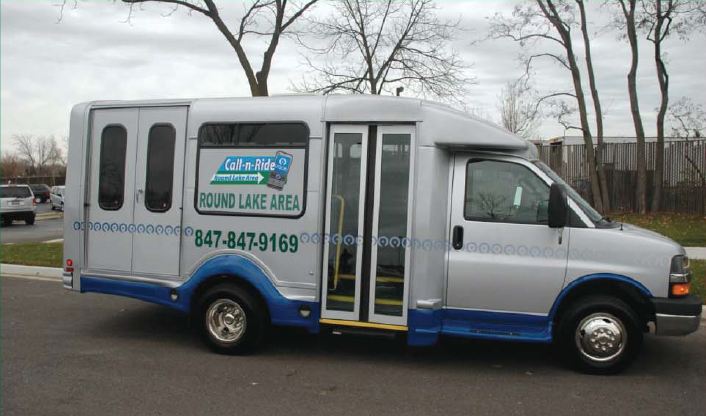
So how CAN we get from one side of RLB to the other, or from RLB to a neighboring village? Have you tried the bus? We have a great option about which you may be unaware: PACE offers the “Round Lake Area Call-n-Ride” Service!

PACE's Round Lake Area "Call-n-Ride" Bus

PACE’s Round Lake Area “Call-n-Ride” Bus

It’s a bit unconventional in that it doesn’t adhere to a rigid schedule of times and places. That said, if you can step out of your transit “comfort zone” and give this a try, you may discover that it’s a great fit, even if only occasionally.

This is a reservation-based, shared-ride service for the general public that picks up and delivers passengers at requested locations within a generous service area (view the Brochure [.pdf] to view the entire area). Coverage includes three Metra stations, plus the College of Lake County, which is a transfer point to two Pace Bus Routes (570 and 572). Trips are $1.75 each way, transfers are free (upon request), and a variety of existing PACE / Metra / CTA Fare Cards & Passes are accepted.

Given the size of our village, (and the relationship with the other RL area villages), PACE recognized the need to extend service to our residents. Unfortunately, without a recognizable “downtown” or village center, we don’t even have a regular bus stop at the RLB Metra Station, the sprawl-based “Civic Campus” (Village Hall / Post Office / Cultural Center / Sports Center), or the even-sprawlier “Central Business District”.  There’s just no THERE there!

If your schedule allows a little flexibility, give this a try some time. Maybe a family “Field Trip” or an inexpensive learning adventure with the kids. Heck, if they learn about it and can gain some independence, maybe they’ll stop asking you to drive them everyplace!

This bus system serves our villages well, and we can “get the hang of it” at our own pace. However, it is very off-putting though to guests and visitors, those we hope to draw to the village and visit our businesses. Imagine the disconnectedness of stepping off the Metra at the RLB Station, and discovering that you are effectively stranded. No established taxi stand there, no regular bus service AT ALL. They shouldn’t HAVE to know to call an hour in advance to reserve a bus!

What we still need to work on: “Transit Oriented Development

Link: PACE Brochure for Round Lake Area Call-n-Ride (.pdf)
Link: PACE Bus Schedule Route 570 (.pdf)

Posted in Children, Seniors, Transit, Walkability | Leave a comment

Can RLB become a “Great Place”?

Does your dream of “doing something” with Round Lake Beach end almost as soon as it starts, with the realization that we just don’t have the budget to do very much?

There is a critical part near the beginning of goal-setting and “visioning” where we must not get distracted with the financial numbers yet. “Working to your budget” guarantees that your aim will be very low, very “practical”, and often very minimal. A hidden trap is that this almost always results in short-range planning, with self-limiting “blinders” which stifle future development of local business, area culture, and the robustness a municipality needs to thrive.

We need the ability to consider the “what if…?”, to envision the great things, the neat and novel things, to set the bar high enough to get results worth going through the hassle of the project in the first place. Once that’s done, with some context (and excitement) of how an idea fits into the larger scheme of things… THEN funding talks can start. They  will be geared more towards “Let’s work on raising what we need!”, as opposed to “What can we do with what we’ve got”.

Ilana Preuss is Chief of Staff at Smart Growth America (SGA), and speaks here (12:44) about how essential “Great Places” are within individual communities, as well as the pivotal economic role they play. She addresses three main points:

  1. Great places are in high demand – people and businesses are moving there
    According to a Gallup poll for the Knight Foundation and the National Association of Realtors, people are looking for neighborhoods where they can gather together with their friends, feel a part of a community, and walk to shops and schools from home or work.
  2. Great places cost government less
    New development costs us less when it is in our existing villages, towns and cities. That is the cost to our municipalities and us the taxpayers. Examples abound across the country about regions that are saving considerably on infrastructure costs by encouraging new construction (i.e.: “in-filling” under-utilized strip malls and parking lots) in existing neighborhood centers, and regional downtowns/”gateways”.
  3. Great places bring in more revenue
    Great places also help increase property values for our jurisdictions’ revenue base and support greater business revenue where foot traffic is key.

Great places can start small; they don’t have to encompass the entire village. Where in RLB would YOU bring a guest from out of town?

Posted in Economics, Planning, Walkability | Leave a comment

If WE don’t think we’re good enough…

… who will?

For drivers heading westbound along Rollins Road from the Gurnee IL area, the “gateway” into Round Lake Beach is the sudden change from Forest Preserve and farm-land to the sprawl of shopping centers with Garden Fresh, Jewel-Osco, Subway, Pep Boys, etc.

Think “first impressions”; this is the first part of our village people see when coming from the interstate, traveling through at over 20,000/day.

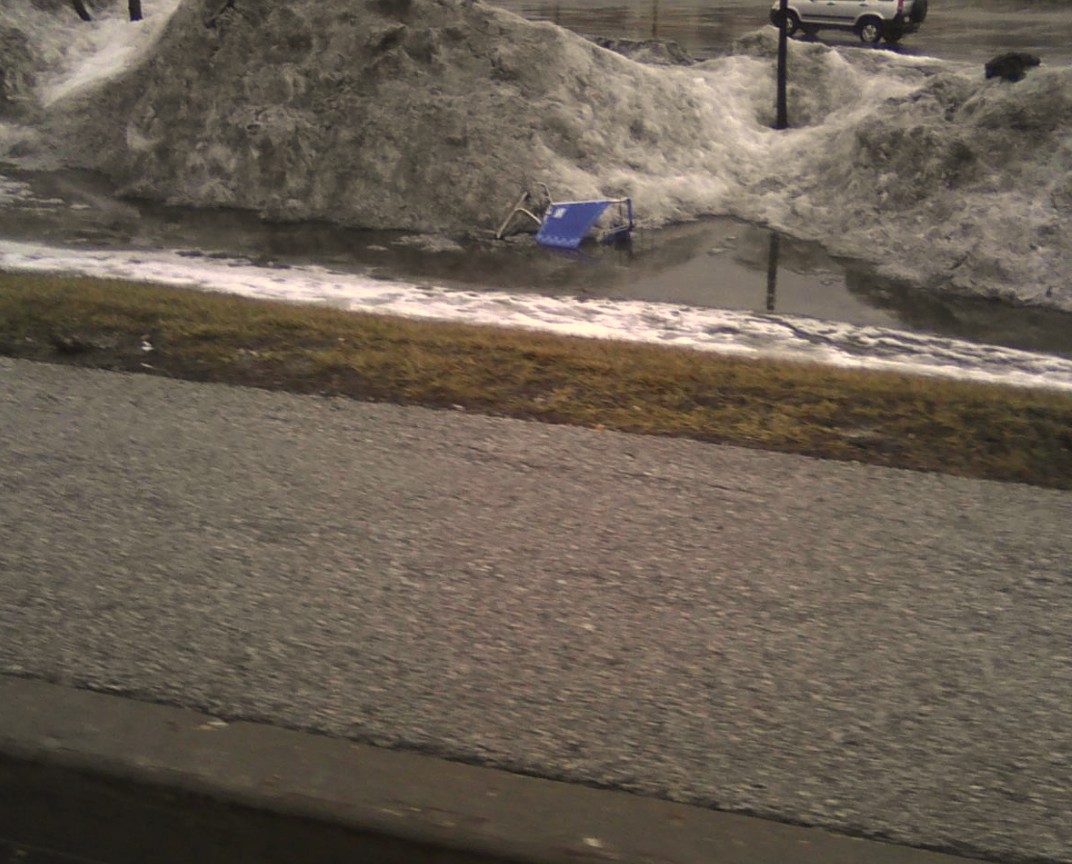
Over the last decade or so that we’ve been watching,  for more years than not, we see during the winters something like this sitting in the drainage contour to the north of Rollins, on the Jewel side:

What impression does this leave on our visitors? What does it make us think about ourselves?

What impression does this leave on our visitors? What does it make us think about ourselves?

For the winter of 2012, it was a Pep Boys cart that sat there, silently welcoming visitors for over six continuous weeks. This one has been there for over a month… who has the “blue” carts in that plaza?

True, shopping carts can be tricky to round-up after windy, wintry days, and once they take a dive into the ditch… well, you can’t retrieve what you don’t see! Problem is, it can’t just be “out of sight, out of mind week after week after week. We’ve ALL seen it while driving on Rollins: store employees and owners, Village employees and officials, residents and visitors galore.

We suspect that, individually, you wouldn’t want company to visit in your home if it was messy; as is often done, there’s a flurry of quick clean-up when we know company is coming (don’t want them to think less of us for living in a mess).

Well, we have “company” in our village every day, and they see the way we keep our village “home”. What kind of message does that send about how we view and value the perceptions of Round Lake Beach? What effect can something like that have on investors and entrepreneurs looking for places to start a business? True, it’s  not a landfill, but it IS an indicator and it’s out there: it easily catches the eye, it’s there day after day, and it’s one of the first things you see driving into town.

Like a well-tended lawn or garden, pride of ownership shows through. Are we showing that we’re proud of RLB?

Posted in Construction / Maintenance | 1 Comment

STROADS

(Chuck Mahron of Strong Towns has a great perspective on one of our biggest infrastructure challenges. We begin with his definition of a common feature in American municipalities, examine how that effects us locally, and finish with his video presentation about the subject.)

“STROAD” [strohd] Noun.

“1. A street/road hybrid; the futon of transportation alternatives. It functions neither as a dedicated ROAD that moves people quickly between two places nor as a historically-proven multi-use STREET that provides a platform for capturing value.
2. The most financially unproductive type of transportation corridor that we can build; high cost to build, but financially yield very little return for the governments that must pay to maintain them.”

Example: Rollins Road

One of our biggest “connectivity” problems is how to deal with Rollins Road, which effectively (VERY effectively) separates the majority of RLB residents (to the south) from the “Central Business District” to the north. Already built-up to a large degree, this area is not bicycle/pedestrian friendly.

Over 20,000 vehicles per day, often travelling at near-highway speeds, really discourage the pedestrians, bicyclists, seniors and families who could otherwise EASILY handle a 10-minute walk to a local (downtown) store, eatery, park or Transit Station (train, bus, and taxi).

Typical Google results for "ROAD": Minimal interuption; takes you from place to place

Typical Google results for “ROAD”: Minimal interuption; takes you from place to place

Typical Google results for STREET: Multi-use centers of life and business in villages, towns, and cities

Typical Google results for STREET: Multi-use centers of life and business in villages, towns, and cities

Think of the Rollins Road “experience” from Fox Lake To Gurnee. The first part of the trip is pretty speedy, very few stop lights, intersections, or businesses having traffic slow to exit or enter. Then we enter the Round Lake Area. Suddenly, the Road is lined with strip malls and retail plazas on either side. Curb-cuts at frequent intervals. Several traffic signals. On leaving RLB, average speed picks up, and it is once again a speedy trip to Rt. 45.

Most of the businesses in our village should not be clogging the travel arteries… they ought to be (as they are in towns and villages around the world) in and around an actual “city center” (aka: “Downtown”).

Once residents hop in their cars, it is just as easy for them to head out of town for all or part of their chores… as many of them do.

OBTW… the 2009 Comprehensive Land Use Plan (CLUP) for RLB calls for growing even more businesses along Rollins Rd to make it the major commercial/retail tax-base area for the Village. However, once the “Rollins/Rt. 83 Gateway” project is finished next year, the expectation of drivers along Rollins Road will be to blitz through our Village even faster.

Watch the video and tell us… should RLB focus on making Rollins Road even more congested with traffic entering and exiting, or should we start planning to gradually build the “downtown RLB” that was over-looked by previous adminstrations?

Link: RLB’s 2009 CLUP – Part I (.pdf)
Link: RLB’s 2009 CLUP – Part II (.pdf)

Posted in Bicycling, Economics, Planning, Transit | Leave a comment

My Car Sucks $7,000 A Year Out Of The Local Economy

A nod to the “My Wheels are Turning” Blog for this one…

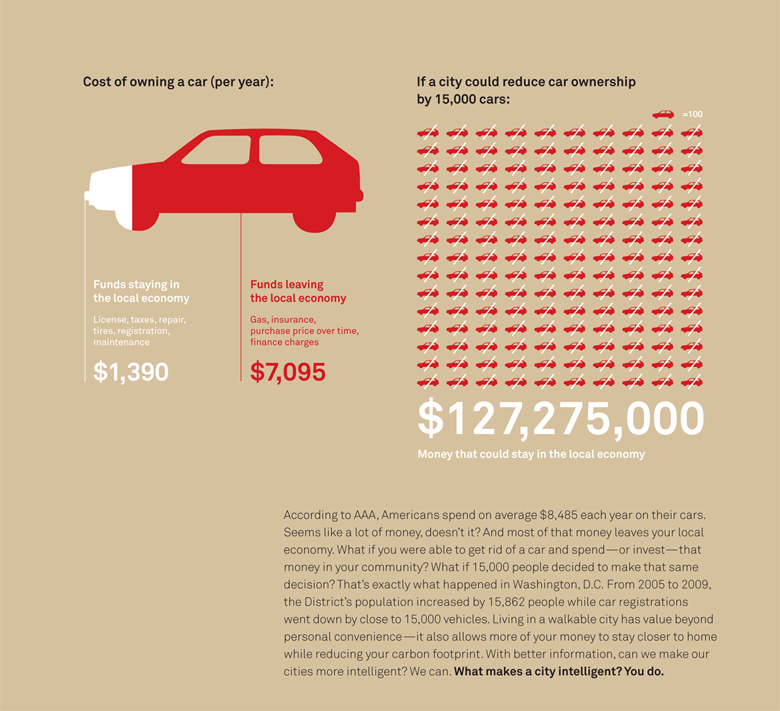
When we must use vehicles for transporation, we spend a lot of money on their upkeep. A LOT of money.

Click to see full-size graphic

Click to see full-size graphic

“Using numbers from AAA, the average American spends $8,485/annually on an automobile. Of that amount, only $1,390 stays in the local economy. The rest, $7,095 per vehicle, leaves the local economy.”

$1,390 Staying in (and returning to) the local economy includes: License, Maintenance, Registration, Taxes
$7, 095 leaving the local economy includes: Gas, insurance, purchase price over time, finance charges

A lot of two-car families have the second car for chores, or to get another “bread-winner” to their job. Walkable and bicycle-friendly changes to our community can allow more people (not everyone, but some) to ditch the second vehicle alltogether. With fewer vehicles, there is proportionally more money available for use in the local community as families “spend local”.

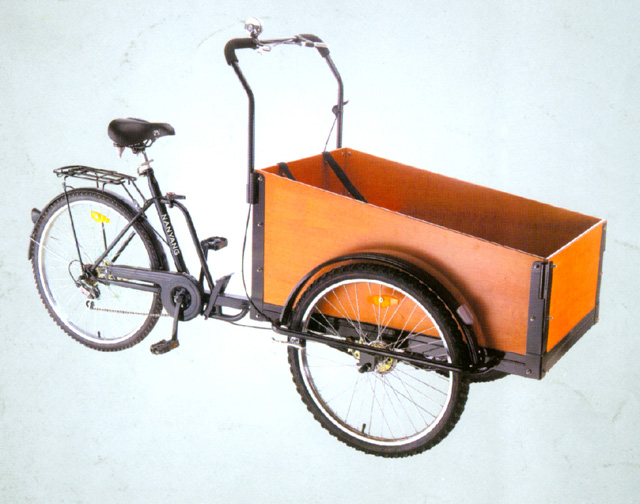
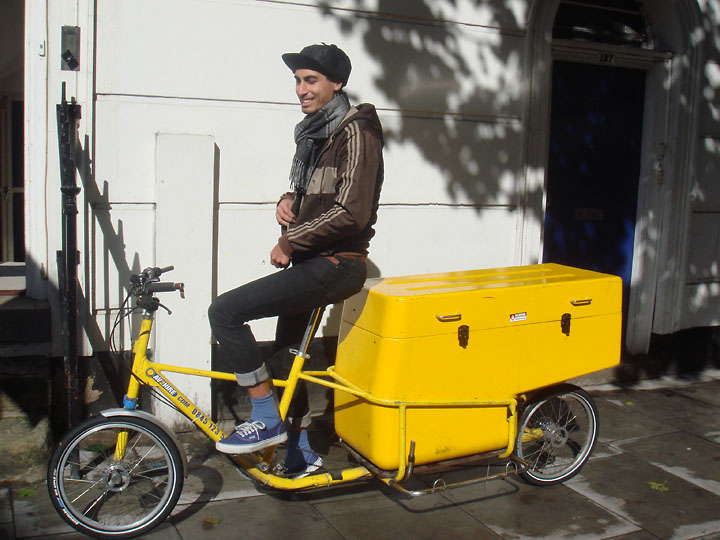
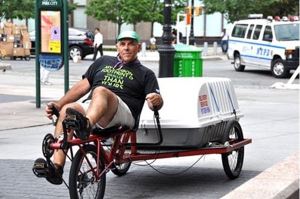
Area merchants and businesses can benefit as well by being able to use cargo/work cycles (still less-common here in the car-crazy US, but all over the place in the rest of the world):

Cargo_Bike1

http://www.skullbikeclub.com/blog/2008/10/plagways.html

http://www.skullbikeclub.com/blog/2008/10/plagways.html

 Cargo_Bike3

 http://www.urbanmobilityproject.com/cargo/

This is something that’ll take time for a lot of our residents and business owners to wrap their heads around… especially since we hardly have any supporting infrastructure in place. It is important to start working on it NOW though; less Federal, State and County money coming in will REQUIRE our villages to be more self-sufficient, resilient, and adaptable.

Link to: “My Car Sucks $7,000 A Year Out Of The Local Economy”

Posted in Bicycling, Economics, Transit | Leave a comment